Muhammad Huzaifa

I design and ship products, and I research how platforms handle trust and safety.

ProductGuard and Floorix are the products. Trust and safety is a separate body of research, across fintech, marketplaces, rideshare, and AI. The pages here are summaries. Full studies are available on request.

Two products in market

I designed and built both of these. They grew out of product work in the field, and they sit apart from the research studies below.

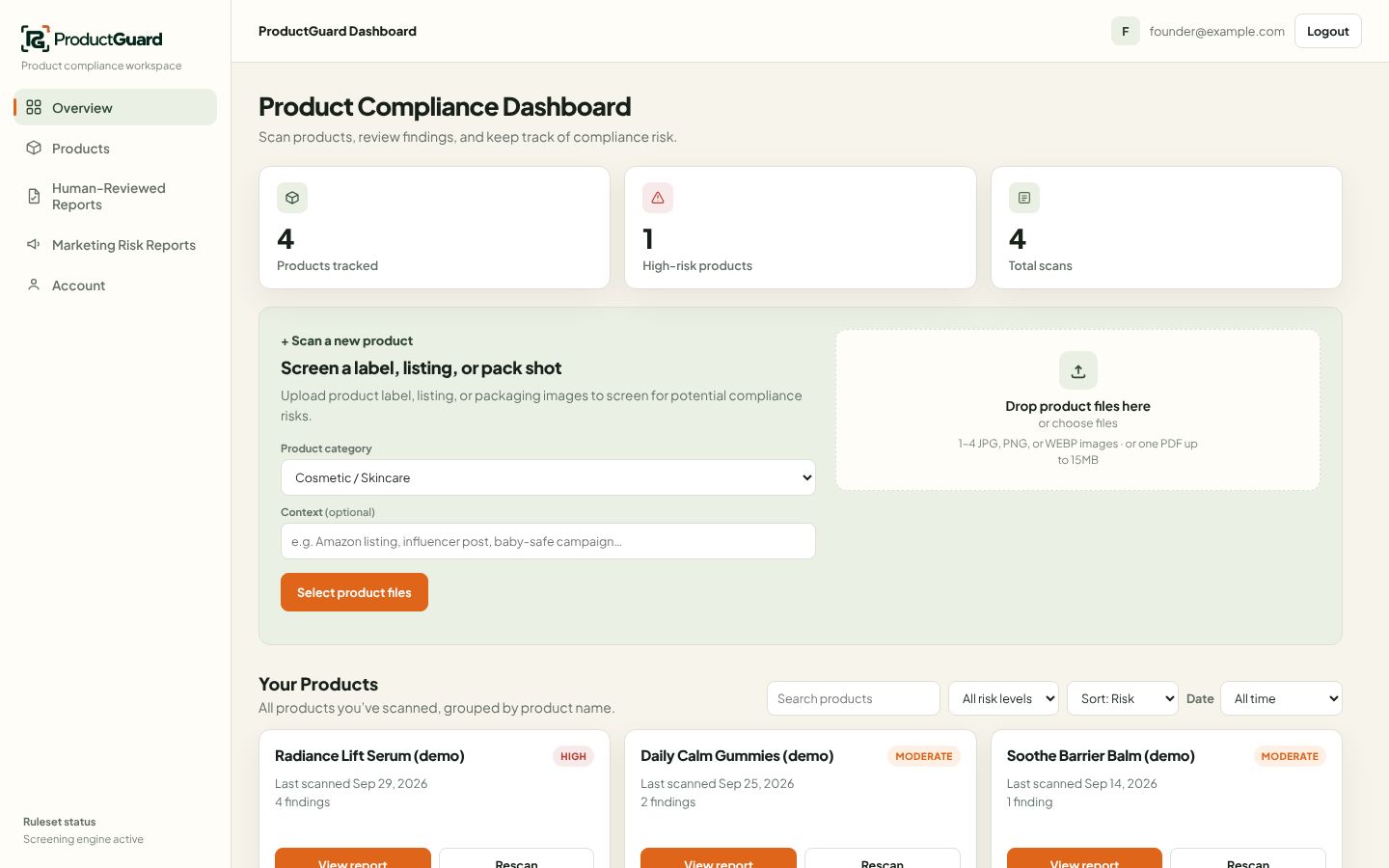
For CPG brands, labeling and marketing requirements can be difficult to assess before launch. ProductGuard screens product images and listings against category-specific rules, prioritizes cited findings, and routes results through a human-review workflow.

  • AI-assisted screening
  • Human-review workspace
  • Role-specific access
  • Versioned compliance rules
ProductGuard dashboard showing products tracked, a file upload panel, and demo product cards sorted by risk.

Built for brand owners, marketing teams and the reviewer who verifies the findings. The screens use demo data.

My roleProduct designer, compliance researcher and builder

Key decisions

  • Classify the product before selecting relevant rules
  • Keep automated findings connected to supporting citations
  • Separate brand access from human review and escalate uncertainty

Password protected. The password is shared with my applications.
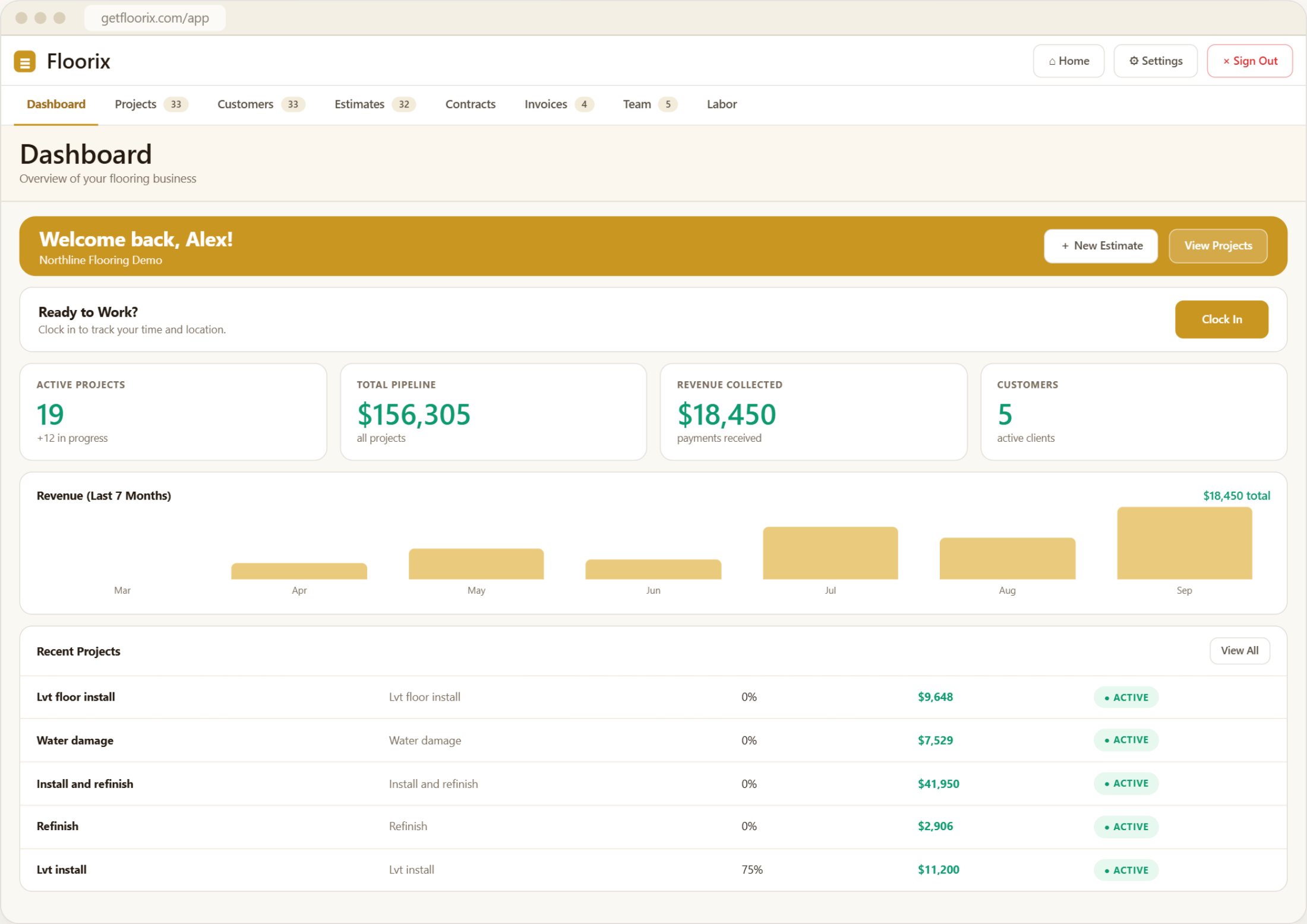
Contractors lose time re-entering the same job information across estimates, contracts, crew work and invoices. Floorix connects those steps, with prefilled estimate-to-contract generation, shared job records and role-specific field access.

  • Estimate → contract
  • Role-based access
  • Crew time & GPS
  • Project → invoice
Floorix owner dashboard with active projects, pipeline, revenue, and recent jobs.

Shipped · Active use. Owners work on desktop; crews and clients can use a phone. Screens show demo data.

My roleProduct designer, UX researcher and builder

Key decisions

  • Reuse approved estimate details to prepare contracts
  • Keep customer and job records connected through invoicing
  • Give owners and crews different views; never block clock-in on GPS

Rest the pointer on a screen to move through it. Pick a thumbnail to switch screens.

Trust & Safety case studies

I study how people move through products they use every day, then turn what I learn into design ideas. No company, app or person is named. The full studies are password protected, and I share the password with my applications.

Case study 01 · Fintech Password protected

Sign-up and early trust in finance apps

How can sign-up set strong protection before money moves?

  • Account security
  • Sign-up
  • Passkeys
  • Design ideas
10+finance apps I signed up for as a new customer
Qualitativeexploratory sign-up review
3scenarios I designed for
5layers in the sign-up design

What I learned

In the apps I tested, a known breached password could be used to create an account, and available two-factor protection was optional. I proposed breached-password screening at sign-up and stronger authentication before sensitive transactions.

What the study includes

  • Three user scenarios and a layered sign-up redesign
  • Password and sign-in wireframes
  • Scoped regulatory context and proposed evaluation measures

Apps are not named. Exploratory study.

Password protected. The password is shared with my applications.

Case study 02 · Youth safety Password protected

The Cross-Platform Blind Spot in Youth Safety

Where do youth-safety signals lose continuity when activity moves from social feeds to messaging services and external storefronts?

  • Youth safety
  • Cross-platform signals
  • Age signals
  • Design ideas
2,500+public seller profiles studied
6steps in the path, from the feed to a sale
3places the path moves through
Cross-platformpublic-interface observations

Core finding

Public-facing posts can direct people from a social feed to external messaging channels, websites or marketplace listings. Safety signals can lose continuity across these transitions because each service sees only part of the journey.

What the study includes

  • The path from a video feed to an outside messaging app to a website or listing
  • Platform features associated with observed pathways, each paired with a design response
  • Six ideas inside a platform, three across platforms
  • Privacy and fairness guardrails
  • Priorities, a 12-month roadmap and measures

Password protected. The password is shared with my applications.

Case study 03 · AI likeness

AI avatars and likeness consent

What should a person see and agree to before an app turns their face or voice into an avatar?

I examined how avatar and video apps present permission at upload, including whether the flow clearly distinguishes a creator’s own likeness from someone else’s. The study translates those questions into clearer consent checkpoints.

  • AI likeness
  • Consent design
  • Onboarding

Full study shared on request.

Request full study
Case study 04 · Consumer commerce

Product claims and marketplace readiness

How can product labels, listings, marketing claims and marketplace policies line up with what customers expect?

Category-specific requirements across FDA, FTC and CPSC guidance, studied across listings. This research shaped ProductGuard.

  • Marketplace integrity
  • Claims review
  • FDA
  • FTC
See ProductGuard
Case study 05 · RideshareWrite-up in progress

Rideshare safety and product experience

How could safety rules show up more clearly for drivers and riders during a real trip?

Drawing on real trip observations, I examined how pickup pins and rider expectations can diverge, leaving drivers and riders in different places. The research leads to seven product design proposals for clearer coordination and safer trips.

  • Product research
  • Platform safety
  • Operational UX
Request summary
Case study 06 · AI systems

AI output reliability and context sensitivity

How can changes in framing alter the way an AI system interprets substantially similar intent?

An exploratory comparison of responses to similarly intended requests with different framing. I outline evaluation cases and design ideas for more consistent handling of context and safety boundaries.

  • AI evaluation
  • Trust & Safety
  • Responsible AI
Request summary

Want to see a study that isn’t open? Request it and I’ll send it over.

How the work gets done

  • Start with the systemMap how the product, the policy, the incentive, and the workflow produce the outcome.
  • Hold the constraints togetherSafety, the business, the rule, and what engineering can ship in a reasonable time.
  • Leave a decision, not a pile of notesTurn the observation into a priority someone can act on.
  • Build enough to test itA workflow, a prototype, or a shipped product, so the recommendation meets real use.

Study

University of Pennsylvania
Regulatory Compliance Specialization
McKinsey & Company
McKinsey Forward — strategy, problem solving, and leadership
Scrum Alliance
Certified Scrum Product Owner (CSPO)
OpenAI Academy
Design and Build Agentic Systems
IBM
Enterprise Design Thinking Practitioner
Interaction Design Foundation
Human-Computer Interaction
Blue Team Labs Online
Open-Source Intelligence Foundations
Education
Master of Business Administration

Ask for a report, or talk about the products.

If you want the youth safety, rideshare, or AI report, say which one. I also like talking through ProductGuard, Floorix, and work that is still early.

Your details are used only to reply to this message.